Product Knowledge
Electric vs Manual Beauty Beds
A practical comparison of electric and manual beauty beds based on operator workflow, adjustment needs, room planning and model verification.

What electric and manual mean in a buying comparison
The meaningful difference is how the treatment position is changed. An electric beauty bed uses powered controls for one or more adjustments, while a manual model relies on mechanical movement or fixed sections. The exact movements are model-specific. A product called electric should not automatically be assumed to adjust height, backrest and leg section in the same way as another electric model.
Some product pages use the broader word adjustable without confirming the mechanism. Treat those models as configuration pending until the supplier identifies how each section moves. This prevents an image, title or category description from being turned into an unsupported technical specification.
Choose according to treatment workflow
Electric adjustment can be valuable when operators change client position repeatedly during facial, skincare or multi-step services. The benefit is not simply that the bed has power; it is whether the available controls support the positions used in the treatment room and can be reached without interrupting the service.
A manual or mechanically adjusted bed may suit a room where the position changes infrequently, where the service menu is simpler or where power access is limited. Buyers should describe a typical appointment from start to finish and count when adjustments are actually needed. That workflow provides a stronger decision basis than choosing by equipment category alone.
Evaluate operator ergonomics and client access
Compare working height, access around the head and sides, armrest arrangement, face opening, leg support and the space needed for stools or equipment. Powered adjustment is useful only when the bed still fits the room and allows the operator to maintain a practical working position.
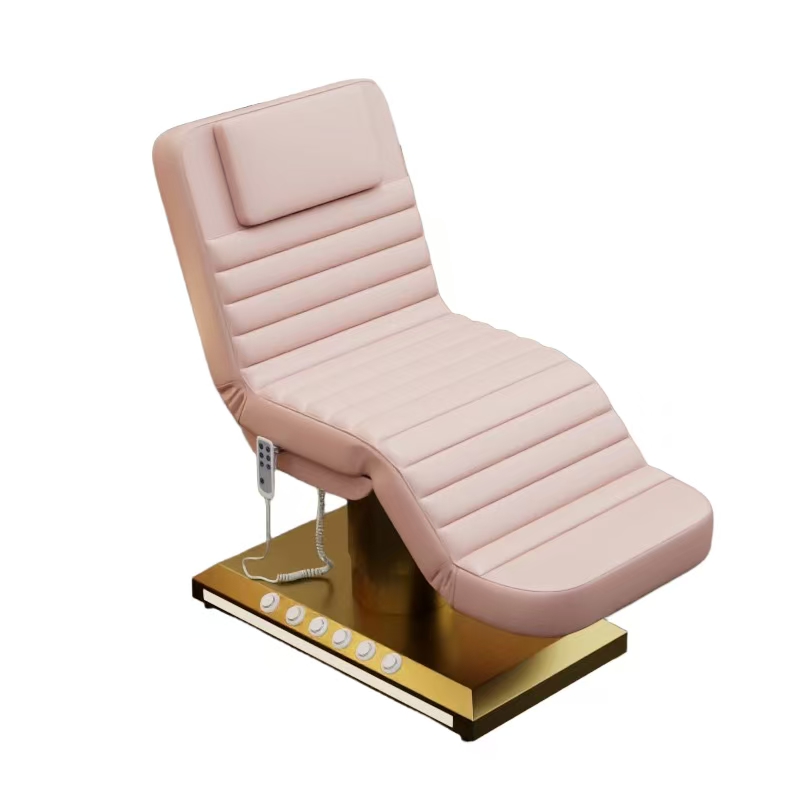
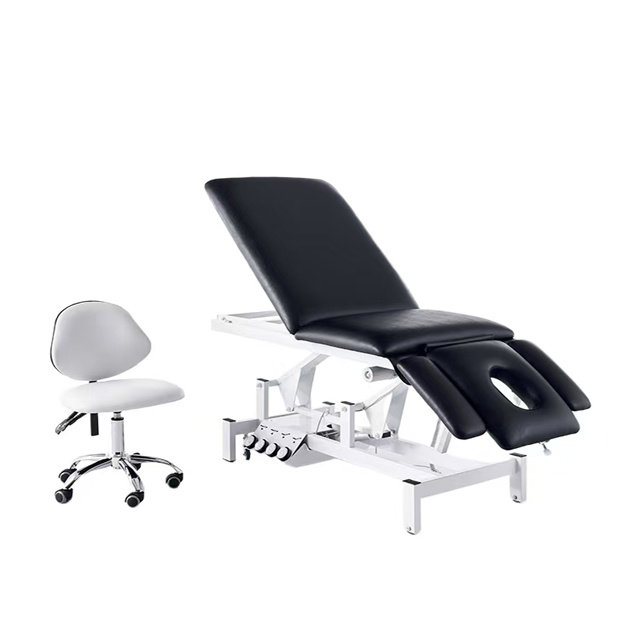
YIO-A01 is identified in the current product record as an electric beauty bed and its product evidence shows a hand controller and base-mounted control buttons. YIO-A06 is presented as an adjustable facial bed with a face opening and sectional surface. The adjustment mechanism and complete configuration should still be checked against the selected SKU before using either model in a final comparison.
Plan power, room layout and daily operation
An electric model requires a safe power plan that keeps cables away from staff and customer movement. Confirm the model-specific voltage, plug, control arrangement and installation guidance for the destination market. Do not copy these values from another product family or assume that every beauty bed shares one electrical configuration.
Manual models remove the powered-adjustment requirement but still need adequate clearance for sections that move mechanically. Check doorway access, operating footprint and cleaning access for both types. Room planning should use verified dimensions and the actual movement envelope, not only the bed length shown in a listing.
Compare maintenance and operating risk
Electric beds introduce powered components and controls that should be included in the maintenance and after-sales discussion. Ask how faults are diagnosed, which components can be replaced and what model-specific service documentation is available. Warranty language should identify the covered SKU, components, duration and exclusions rather than relying on a general category promise.
Manual adjustment can reduce electrical complexity, but hinges, supports, locks and moving sections still require inspection. Upholstery, frame stability and cleaning access matter to both types. A useful comparison records the maintenance responsibility for each mechanism instead of assuming that manual means maintenance-free or electric means difficult to service.
Compare total value, not only purchase price
The purchase decision should consider operator time, treatment volume, expected service life, room utilization, training, maintenance, replacement parts and shipping. An electric model may justify a higher initial cost in a high-frequency room if its verified adjustments improve workflow. A simpler model may provide better value when the service position rarely changes.
For distributors, the comparison also includes customer segment and evidence quality. A catalog should state which movements and controls are verified for each SKU. Keeping entry, mid-range and powered models clearly separated helps buyers choose without creating promises that the underlying product data cannot support.
Use a model-specific verification checklist
Before requesting a quotation, record treatment type, adjustment frequency, preferred working height, room dimensions, quantity, destination and deadline. For every shortlisted SKU, request the adjustment method, controlled sections, dimensions, material information, packed size and weight, electrical details where applicable, included items and warranty terms.
Mark each answer as confirmed, pending or not applicable. Do not turn a missing value into a category default. YIO can help compare beauty bed options, but the final electric-versus-manual decision should be based on the verified configuration of the selected models and the real workflow of the treatment room.
FAQ
Is an electric beauty bed always better than a manual bed?
No. The better choice depends on treatment workflow, adjustment frequency, room conditions, maintenance planning and budget. Compare the verified configuration of specific models.
Does electric mean every bed has the same adjustments?
No. The number of powered sections, control method and movement range are model-specific and should be confirmed before purchase.
What should be confirmed for an electric beauty bed?
Confirm the exact adjustable sections, control method, model-specific electrical requirements, dimensions, included items, maintenance support and warranty terms.
Can an adjustable beauty bed be assumed to be manual?
No. Adjustable describes a capability, not necessarily the mechanism. Ask whether each section is powered, mechanically adjusted or fixed for the selected SKU.